InferKit is no longer available. The notice on inferkit.com says the AI writing app has become outdated, that the team is moving on to new projects, and that paid subscriptions were cancelled with the last payment refunded. If you came here to sign up, log in or call its API, none of that is possible now. Below you’ll find what InferKit was, what it cost, which details are confirmed and which aren’t, and what to use for each job it used to do.
InferKit at a glance
| Question | Answer |
|---|---|
| Is it available? | No. The official site shows only a discontinuation notice. |
| What did it do? | Continued text you typed in, through a web page and an API. |
| Who made it? | Adam Daniel King, who also built Talk to Transformer. |
| What happened to paid plans? | Cancelled, with the last payment refunded. |
| Contact on the notice | contact@inferkit.com |
What InferKit was
InferKit was a text-continuation tool. You pasted in a few sentences, and it wrote what it predicted would come next. It had a browser interface for writers and an API for developers.
Adam Daniel King built it. He had earlier launched Talk to Transformer, a popular demo site that ran OpenAI’s GPT-2 model, and he described InferKit as drawing on that experience. GPT-2 was announced in February 2019, and OpenAI released the full 1.5-billion-parameter version in November 2019 after a staged rollout. That context explains the tool’s character. It was built in the era of “continue this paragraph” models, before chat assistants that follow instructions became the default.
What the official notice says, and what it leaves out
Is InferKit still available?
No. The notice gives the reason in plain terms: AI moved on, and the app became outdated. It also says paid users were cancelled and refunded. Other sites report that InferKit’s old pricing, documentation and blog pages now redirect to the same notice, so no official archive of the product remains on the site.
When did it shut down?
The notice has no date, and published sources disagree. Some directories and encyclopedia-style pages say April 2024. Others describe it as a 2025 shutdown. One tool directory marked InferKit inactive on August 1, 2024, which fits the earlier date better. Treat any single month as unconfirmed.
What powered it?
Also unconfirmed. Directory pages variously claim GPT-3 or an LSTM network. The official notice names no model, so none of these claims can be checked against the vendor. If you see InferKit described as “built on GPT-3” as settled fact, that is repetition, not documentation.
What InferKit cost while it was live
The official pricing page no longer exists, so these figures come from third-party directories that agreed with each other while the service ran. They are historical.
| Plan | Price | Included | Extra characters |
|---|---|---|---|
| Free demo | $0 | 10,000 characters per week | n/a |
| Basic | $20 per month | 600,000 characters per month | $0.28 per 10,000 |
| Premium | $60 per month | 2,500,000 characters per month | $0.12 per 10,000 |
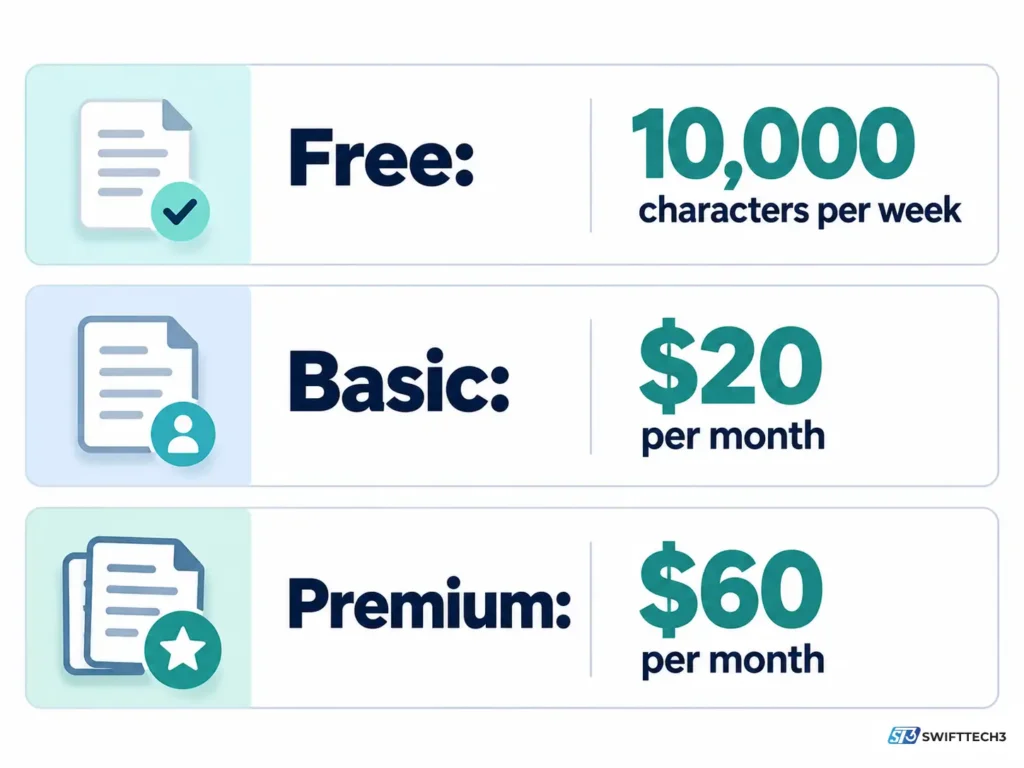
Notice that InferKit billed by characters generated. Most modern providers bill by tokens, a unit that is not the same as a character, so you can’t compare costs one-to-one. If you’re budgeting a replacement, run a small test batch and measure your real usage.
Don’t confuse it with other projects called InferKit
Searching the name brings up several unrelated results:
- A GitHub project by a different author: an Objective-C inference toolkit for Apple platforms, released under the MIT license, with backends for Core ML and OpenAI-compatible services.
- A Dart package on pub.dev: a client for OpenAI-compatible servers such as llama.cpp, vLLM, LM Studio and Ollama gateways.
- A Python package on PyPI: a library for serving AI functions as an API.
- An npm package: a wrapper for the original InferKit text API. With the service gone, it has nothing to connect to.
The first three describe themselves as independent developer tools with different purposes. If your code imports an “inferkit” package, check which one it is before assuming it’s affected by the shutdown.
What to use instead
The right replacement depends on what you used InferKit for.
| If you used it for | Look at |
|---|---|
| General drafting and continuing text | ChatGPT, Claude or Google Gemini |
| Fiction and story continuation | Sudowrite, NovelAI or DreamGen |
| Calling a text model from your own app | A major provider’s official API, or a local runtime such as Ollama or LM Studio |
| Researching a topic with sources | A search-based assistant such as Perplexity |
For fiction, Swifttech3’s DreamGen AI review from a writer’s perspective covers how a story-focused platform handles long sessions, and the FictionLab AI guide covers another option. For research-style questions, the Perplexity AI overview shows how an answer engine differs from a plain text generator. Developers weighing hosted compute can read the Chutes API guide to serverless AI. Check each provider’s own pricing page before you commit, since plans change often.
Move from “continue this” to “do this”
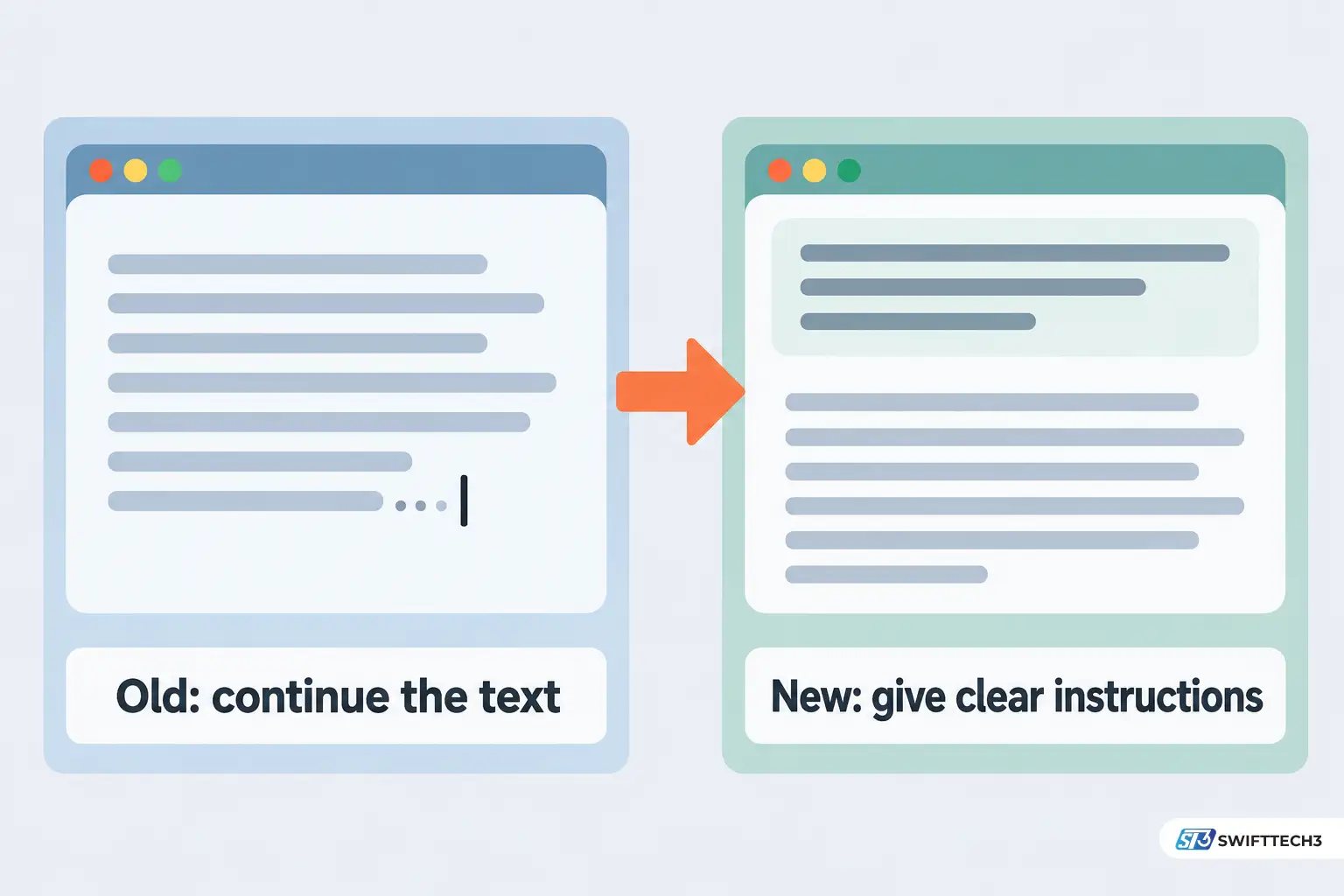
InferKit expected raw text and wrote the next part. Chat assistants expect instructions. A prompt that worked before, like a half-finished paragraph, may now produce a reply about the paragraph instead of a continuation of it.
Be explicit. Something like “Continue the passage below in the same voice and tense, about 150 words, without summarizing it” gets closer to the old behavior. Paste the passage after the instruction.
Practical Insights
- Your old API code will fail. Nothing answers at the old endpoint, so every call returns an error. Plan for a code change, not a setting change.
- Output length controls differ. InferKit measured length in characters. Newer APIs cap output in tokens, so set a limit and test it.
- Costs shift. Character-based plans meant predictable monthly bills. Token-based, pay-per-use pricing can be cheaper or dearer depending on volume, so estimate from real prompts.
- Saved work may be gone. The notice says nothing about retrieving old outputs. If you need something, email the address on the notice rather than waiting.
- Refund questions go to the same address. The notice says refunds were issued, but it doesn’t describe how to dispute a missing one.
Common mistakes
- Trusting directory pages that still list live pricing and a signup button. The official site is the authority, and it says the service is closed.
- Assuming any “inferkit” package on a registry is the same product.
- Pasting your old prompts into a chat assistant unchanged and judging the tool on the result.
- Switching to a tool that is a poor fit for the job, such as a marketing-copy generator for a novel.
Using AI-written text on a website
If you’re replacing InferKit to produce web content, Google’s guidance on generative AI is worth reading first. Google says generative AI can help with researching a topic and structuring original work. It also says that producing many pages without adding value for readers can violate its spam policy on scaled content abuse. Its documentation stresses accuracy and recommends a human check of machine-written material, including titles and image descriptions, before publishing. Google also suggests telling readers how content was created.
In practice: draft with a tool if you like, but verify every fact yourself, add something the reader can’t get elsewhere, and avoid publishing in bulk.
FAQs
Is InferKit still available?
No. Its website now shows only a discontinuation notice. Paid subscriptions were cancelled and refunded.
Can I still use the InferKit API?
No. The service is closed, so API calls have nothing to answer them. Any app that depended on it needs another provider.
Did InferKit refund paid users?
The official notice says paid subscriptions were cancelled and the last payment refunded. If you think a refund is missing, the notice lists contact@inferkit.com.
Why was InferKit discontinued?
The notice says AI has advanced, the app became outdated, and the team wanted to focus on new projects. It gives no further detail.
Is InferKit the same as Talk to Transformer?
No, though they share a creator. Adam Daniel King built Talk to Transformer first and said InferKit drew on that experience.
What is the best alternative to InferKit?
It depends on the job. General assistants suit everyday drafting, fiction tools suit story work, and a provider API or local runtime suits developers.
Is the “inferkit” package on GitHub, PyPI or pub.dev the same product?
No. Those are separate developer projects with different purposes. Only the npm wrapper targeted the original text API.
Can I recover text I generated on InferKit?
Only if you saved it earlier. The notice doesn’t mention retrieval, so contact the listed address if you need something.
Conclusion
InferKit is gone, and the one dated certainty is its own notice: closed, outdated, refunded. Beyond that, expect gaps. The shutdown month and the underlying model are unconfirmed, and its prices survive only in third-party listings.
What to do next:
- Remove any InferKit endpoint from your code and pick a replacement provider.
- Rewrite continuation-style prompts as clear instructions.
- Test real usage costs before choosing a plan.
- Check which “inferkit” package you actually have installed.
- Fact-check any AI-assisted text before it goes live.
Disclaimer
This article is for general information only. Details such as prices, features and availability of the tools mentioned can change, so please confirm them with each official provider before you buy or decide. The InferKit pricing shown is historical and drawn from third-party listings. Information current as of October 2026.